





Upcoming Trips

Exploring The Lake District…
Nestled in the heart of Cumbria, the Lake District National Park is home to vibrant local communities, many of whom continue long-standing traditions linked to farming, craftwork, and the landscape around them.
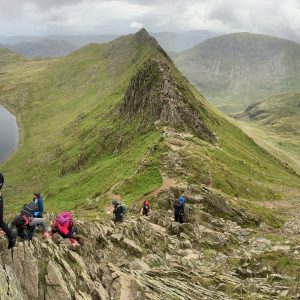
Renowned for its dramatic fells, vast forests, and glittering lakes, the Lake District contains England’s highest mountain, Scafell Pike, its deepest lake, Wastwater, and charming villages such as Grasmere and Hawkshead.
The National Park Authority aims to:
- Support the sustainable prosperity and well-being of its communities.
- Protect and enhance the area’s exceptional landscapes, wildlife, and cultural heritage.
- Encourage everyone to discover and enjoy its unique character and outdoor experiences.
Lake District History
The Lake District National Park was officially established in 1951, becoming one of the earliest national parks designated in Britain.
Covering around 912 square miles (2,362 km²), it is the largest national park in England and is renowned for its rugged mountains, deep valleys and famous lakes such as Windermere and Ullswater.
At its heart rises Scafell Pike — at 978m, the highest mountain in England.
Human history here stretches back thousands of years, from ancient agricultural settlements and Roman routes to the later development of mining, slate quarrying and the growth of tourism in the 18th and 19th centuries.
Celebrated for its literary connections, artistic heritage and striking natural landscapes, the Lake District was recognised as a UNESCO World Heritage Site in 2017.
the Mountains of The Lake District
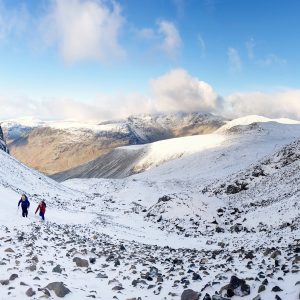
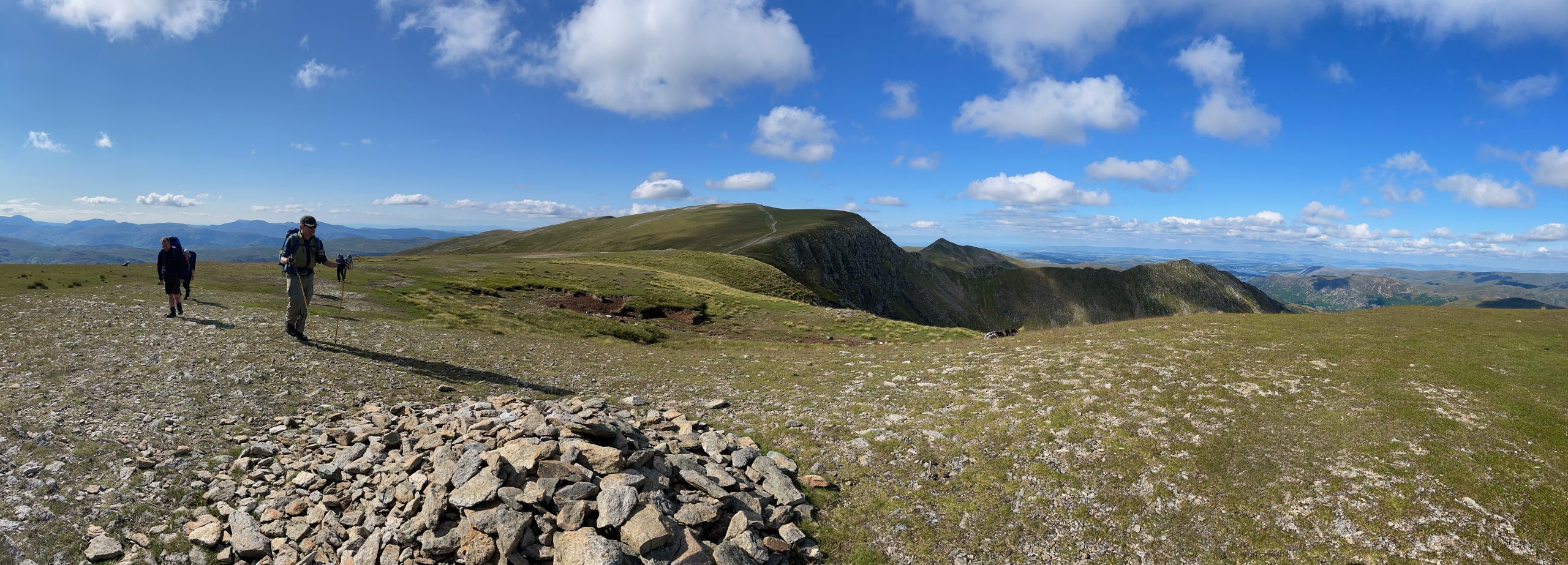
Many walkers gravitate toward Scafell Pike, England’s highest peak. It’s a magnificent mountain, but its popularity means the main routes can feel busy, especially in summer.
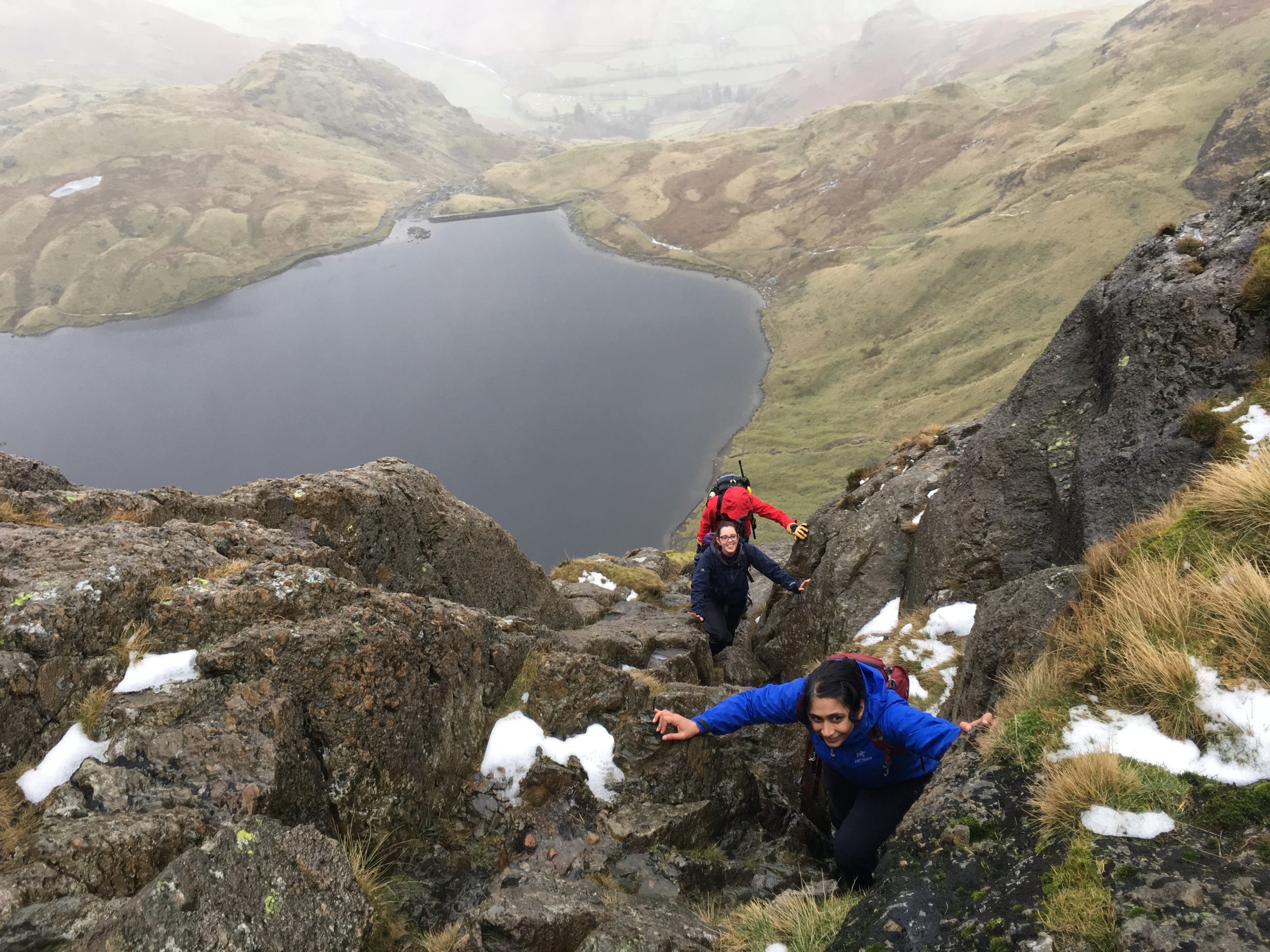
While other well-known fells such as Helvellyn and Skiddaw continue to attract large numbers, countless quieter summits and ridgelines remain largely overlooked — which is why City Mountaineering trips often seek out these lesser-trodden corners of the park.
The Lake District offers an extensive network of public footpaths and bridleways, along with vast areas of open access land, giving hikers the freedom to roam across valleys, slopes and high plateaus in almost every direction.
Geology of The Lake District
The geology of the Lake District is remarkably diverse, and its landscapes have played an important role in shaping geological understanding in Britain.
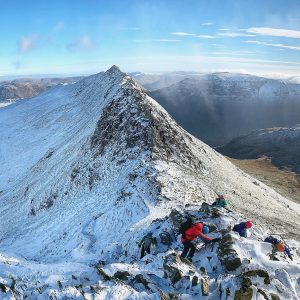
The area is built from a mosaic of ancient rocks — including volcanic formations, sedimentary layers and deeply folded slates — formed during several dramatic geological episodes. The rugged fells, sharp ridgelines and U-shaped valleys owe much to both this turbulent geological history and the powerful sculpting of glaciers during the last Ice Age.
environment of The Lake District
A significant portion of the Lake District is designated as protected land, including numerous SSSIs, National Nature Reserves and areas recognised under UK and European conservation law.
Its ancient woodlands, species-rich meadows and wetland habitats support a wide variety of plant and animal life, from rare mosses and lichens to important bird and insect populations.
Ongoing conservation and restoration projects aim to protect these precious landscapes, ensuring the park’s natural heritage thrives for future generations.
All Trips in The Lake District National Park Series
-

-

-
 Trip Full
 -
-

-

-
-

-




Small Groups.
94% are solo travellers and with never more than 8 people per trip we guarantee a personal experience for all
Off Track.
With expert local knowledge and qualified guides we will take you away from the crowds, off the beaten track
Sustainable.
Promoting train travel & using local produce offers a perfect balance of adventure and sustainability
No Hassle.
Travel, transfers, accommodation, any technical kit and guided hiking is included in all our trips
Out of the City, Into the Mountains
All inclusive adventures from the city to the mountains.