




Upcoming Trips
-
Cape Wrath Trail (Stage 1)
03 Apr$1,196.91 -
Cape Wrath Trail (Stage 2)
10 Apr$1,196.91 -

Cape Wrath Trail (Stage 3)
17 Apr$1,196.91 -
Cape Wrath Trail (Stage 1)
11 Sep$1,196.91 -
Cape Wrath Trail (Stage 2)
18 Sep$1,196.91 -
Cape Wrath Trail (Stage 3)
25 Sep$1,196.91
Hiking the Cape Wrath Trail…
Stretching from Fort William to Cape Wrath on the far north-west coast of Scotland, the Cape Wrath Trail is one of the wildest and most rewarding long-distance hiking routes in the UK. Covering approximately 350 kilometres in total, the trail passes through some of the most remote landscapes in the Scottish Highlands, linking mountain glens, isolated lochs, rugged coastlines and tiny Highland communities.
Unlike many of Britain’s long-distance trails, the Cape Wrath Trail is not a formally designated or waymarked route. In places there may be a clear path beneath your feet, while elsewhere the journey crosses open hillside, boggy ground, remote mountain passes and rivers.
The trail can be tackled as one continuous journey or split into separate stages, making it possible to experience the route over several trips. Each section offers its own distinct landscapes and challenges, while still capturing the sense of remoteness and adventure that makes the Cape Wrath Trail so special.
The Cape Wrath Trail route
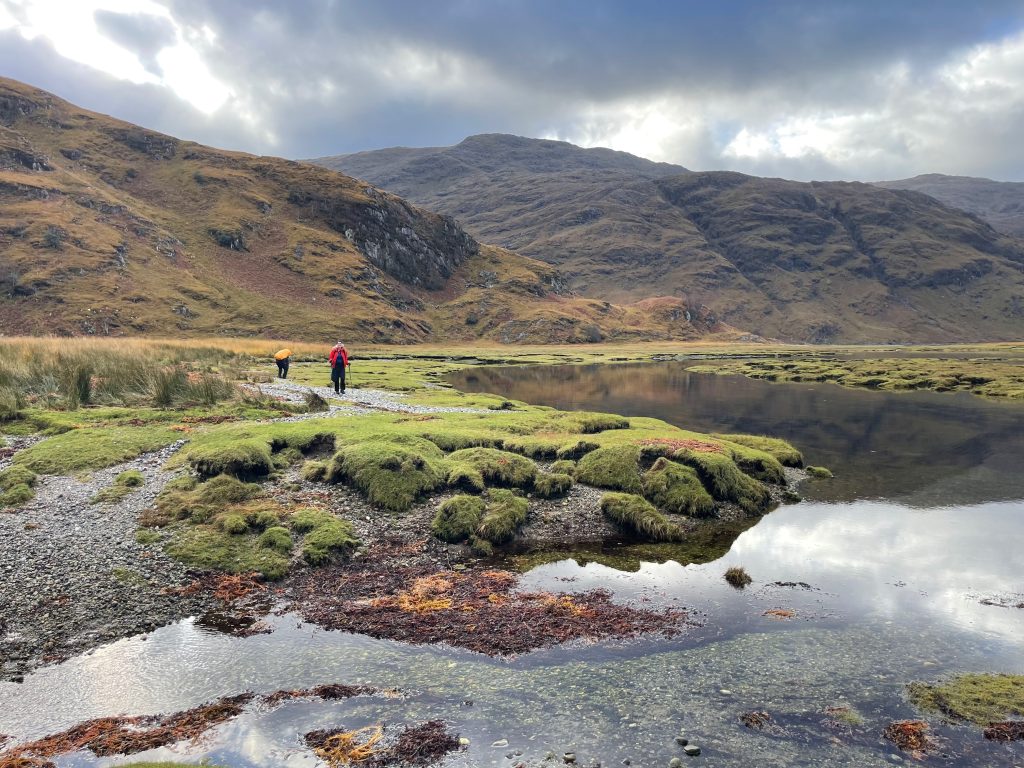
There is no single official Cape Wrath Trail route, but most variations begin around Fort William before travelling north through the Western Highlands towards Cape Wrath. Along the way, the trail passes through some of Scotland’s most spectacular mountain areas, including Knoydart, Kintail, Torridon and Assynt.
Our Cape Wrath Trail journey is divided into three stages, allowing walkers to complete the route over separate trips or combine stages depending on their time and experience. Stage 1 travels from the Fort William and Glenfinnan area to Morvich, Stage 2 continues north towards Ullapool, and Stage 3 takes in the final northern section towards Cape Wrath.
Each stage has its own character, with mountain passes, long wilderness valleys, river crossings and remote coastlines ensuring that the scenery is constantly changing. Whether you join us for one section or gradually work your way through all three, each stage provides a substantial adventure in its own right.
How Difficult is The Cape Wrath Trail?
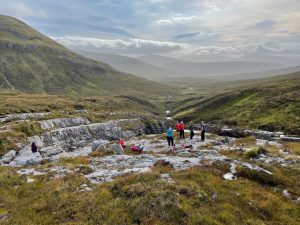
The Cape Wrath Trail is widely regarded as one of the toughest long-distance walking routes in the UK, but you do not need to complete the entire trail in one journey to experience its challenges. Each stage involves a week of walking across rough and often pathless terrain, while carrying the equipment needed for a multi-day trip.
Unlike a well-developed trail such as the West Highland Way, there are long sections with few facilities and limited opportunities to leave the route. Boggy ground, river crossings, steep mountain passes and rapidly changing Highland weather can all add to the difficulty, while the absence of waymarkers makes navigation an important part of the experience.
A good level of fitness and previous mountain walking experience are therefore strongly recommended. Splitting the trail into stages makes it possible to take on the route in more manageable sections, while still enjoying the remoteness and sense of adventure for which the Cape Wrath Trail is known.
Wild Camping on the Cape Wrath Trail
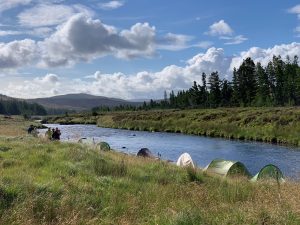
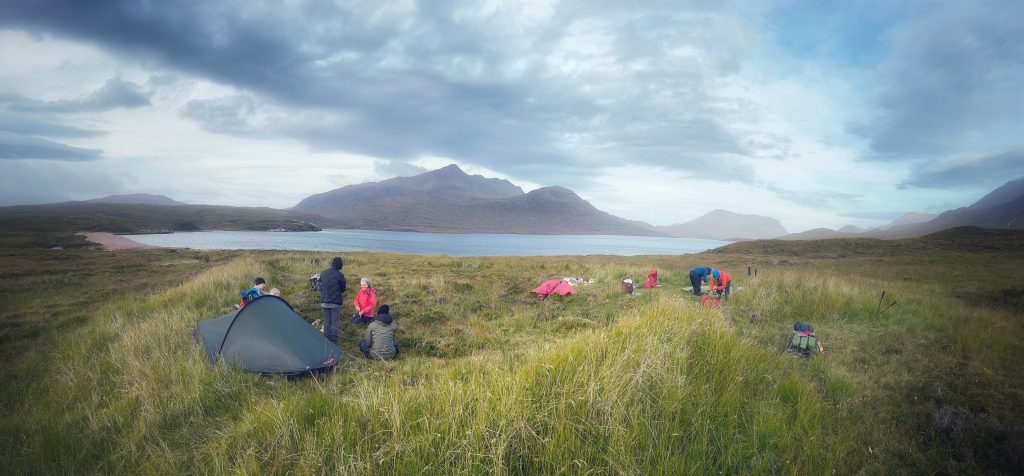
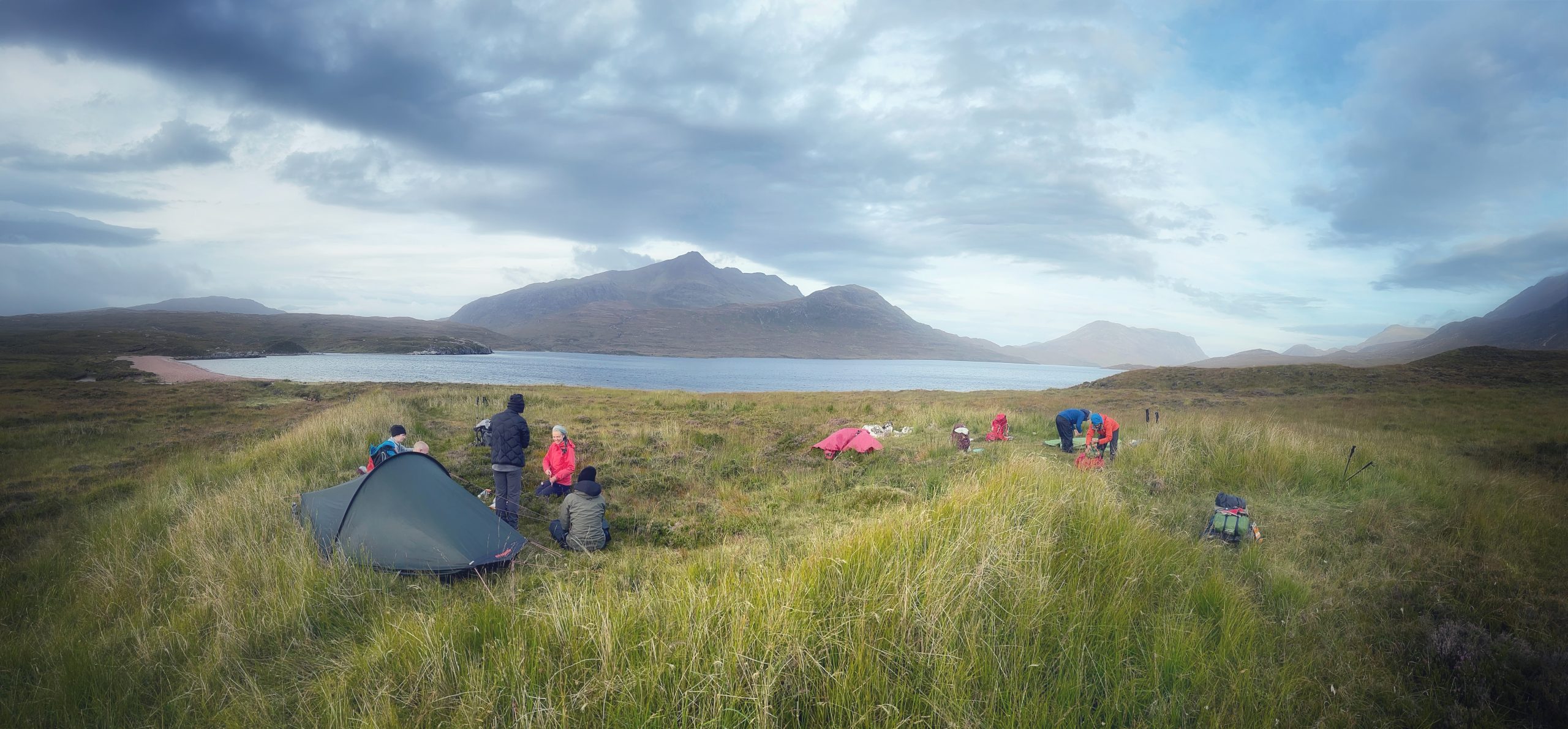
Wild camping is an important part of the Cape Wrath Trail stages and allows walkers to travel through areas where accommodation and other facilities simply do not exist. After a full day on the trail, camp may be beside a remote loch, deep within a Highland glen or beneath some of Scotland’s most dramatic mountains.
Travelling this way creates a very different experience from walking between hotels or organised campsites. Everything needed for each section is carried in your backpack, and evenings are spent preparing food, setting up camp and enjoying the peace of the surrounding wilderness.
For many walkers, these remote camps become some of the most memorable moments of each stage. Even over a single section of the trail, there is a genuine sense of isolation and immersion in the landscape that is increasingly difficult to find elsewhere in Britain.
Reaching Cape Wrath
For those taking on the final stage, Cape Wrath provides a dramatic end point to the route. Located at the far north-western edge of mainland Britain, the headland is surrounded by open Atlantic Ocean, towering sea cliffs and an immense sense of space.
The Cape Wrath Lighthouse has stood here since the early 19th century, marking a coastline long known for its exposed position and wild weather. Reaching it on foot gives the location a particular significance, whether it marks the end of three weeks of demanding hiking or the completion of a journey undertaken over several separate trips.
For walkers who choose to complete the Cape Wrath Trail in stages, arriving at the lighthouse can be the culmination of several adventures rather than one continuous expedition. That makes the final approach all the more rewarding, bringing together a journey experienced across some of the wildest landscapes in the Scottish Highlands.
All Trips in The Cape Wrath Series


Frequently Asked Questions
The Cape Wrath Trail is arguably the UK’s toughest long-distance hike that involves multi-day backpacking, wild camping, and walking long days in remote and challenging terrain. It is best suited to someone that is without injury, has a good level of fitness and has mountain hiking experience. That said, we often have people with no wild camping experience on this trip and they absolutely love it!
Each stage covers a different section of the route with Stage 1 involving many mountain passes, Stage 2 involving longer hiking days and Stage 3 involving most of the river crossings. Each stage can generally be booked independently. This is often how people join us on this trip: They will join us for one stage, then come back and join the next stage, then again to complete the trail (this is rarely done in order, as most people join stage 2 first, then stage 3, then stage 1).
Previous backpacking experience isn’t essential, but it is recommended and you should be fit enough for consecutive long days and comfortable carrying a heavy backpack over rough terrain.
The West Highland Way touches civilisation every day on the trail. The Cape Wrath Trail is significantly wilder and less developed, with rough terrain, fewer facilities and sections where navigation is much more demanding, often not seeing another person or occupied building for many days at a time.
Stages are generally scheduled during the more favourable months for long-distance walking in Scotland. These tend to be outside of the short winter days and stormy months and avoiding those pesky midges in summer. We typically organise The Cape Wrath Trail in April or early May and in September.
Some sections can involve river crossings, and the entire trail involves remote camping. Our highly experienced guides assess conditions each day and will adapt the route or crossing when necessary.
Small Groups.
94% are solo travellers and with never more than 8 people per trip we guarantee a personal experience for all
Off Track.
With expert local knowledge and qualified guides we will take you away from the crowds, off the beaten track
Sustainable.
Promoting train travel & using local produce offers a perfect balance of adventure and sustainability
No Hassle.
Travel, transfers, accommodation, any technical kit and guided hiking is included in all our trips
Out of the City, Into the Mountains
All inclusive adventures from the city to the mountains.